Moving a loaded bin along a collection route and lifting it for a transfer are different handling tasks. The equipment needs to suit the container, its contents and the movement required at each stage.
LiftRite supplies powered towing and lifting solutions for waste and recycling handling. These LiftRite installation videos show two approaches: towing wheeled bins and using a Lift & Drive trolley with a rotator to lift and turn a bin.

The handling task: moving wheeled bins between collection, storage and handling points.
The solution shown: an electric tow tug provides powered assistance through a connection to the bin. The towing arrangement is selected around the container and the route it needs to travel.
For your site: loaded weight, wheel condition, hitch compatibility and the bin's stability all matter. We also consider gradients, thresholds, turning space, stopping requirements and interaction with pedestrians or other vehicles.

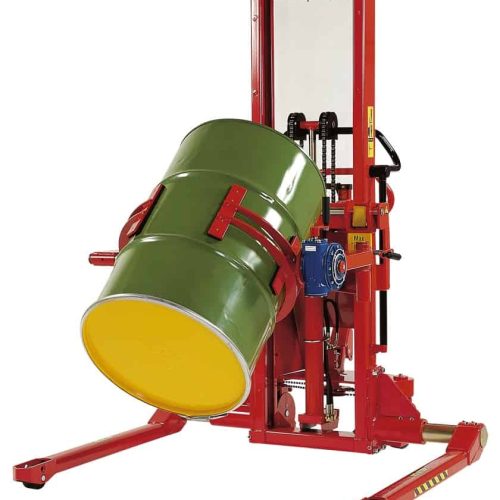
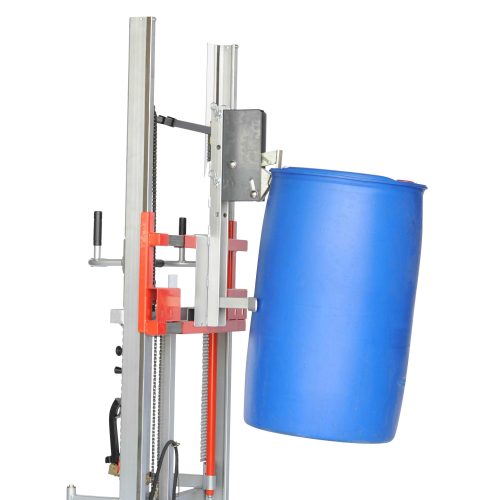
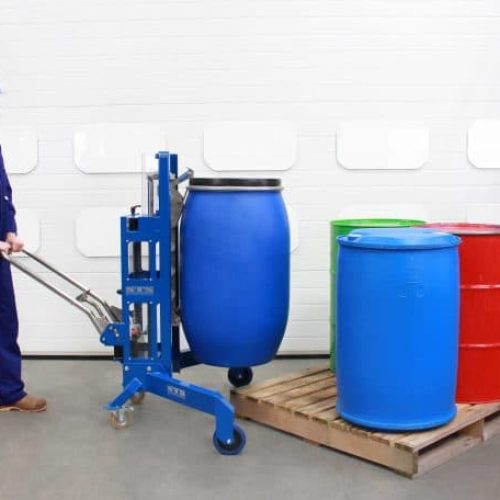
The handling task: supporting a bin while changing its height and orientation.
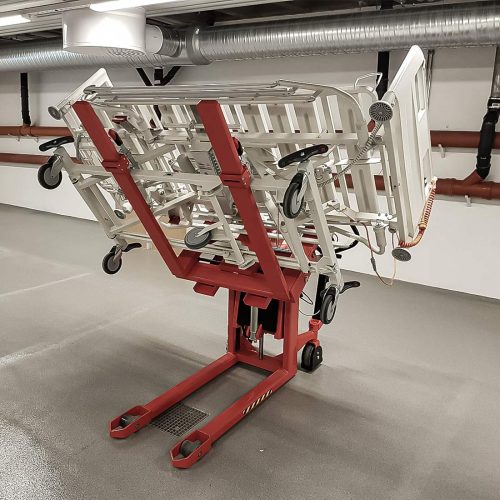
The solution shown: a Lift & Drive trolley fitted with a rotator holds the bin during lifting and turning. This approach can be assessed where a process requires controlled positioning or tipping of a compatible container.
For your site: bin dimensions, loaded weight, attachment contact points and retention throughout the turn determine suitability. If emptying is required, we also assess the receiving container, discharge height, clearance and how the contents move as the bin turns.
A demonstration using your actual bin or a representative container helps establish the connection, handling sequence and access needed.
Send us photographs of the bin and its wheels or lifting points, the maximum loaded weight, and a short video or layout of the task. Include the route conditions for towing, or the required height and orientation for lifting and tipping. LiftRite can then discuss an appropriate solution.
Discuss your waste handling project