
Food and beverage material handling solutions need to fit the production task as well as the load. Lifting ingredient sacks, transferring drums and moving packaged products each call for a different grip, working height and movement path. LiftRite supplies vacuum and mechanical lifting systems configured around these requirements.
We look at the complete sequence, from the lowest layer on a pallet to the final placement position, alongside cleaning methods, packaging condition and the space available around the line. The aim is to reduce repetitive manual lifting while keeping the load controlled and the work area accessible.
These LiftRite videos show three approaches to sack, drum and crate handling. Select a preview to watch the equipment operating on YouTube.

The handling task: picking up and moving sacks without the operator carrying their full weight through the transfer.
The solution shown: a suspended vacuum sack gripper that holds the bag while the operator guides its movement. The footage demonstrates pickup and positioning of bagged loads.
For your food production process: sack material, porosity, seams and fill level affect the grip. The system must also reach the lowest pallet layer and the required placement height. Testing your actual packaging helps establish the right lifting head and vacuum arrangement.

The handling task: lifting and transferring drums between positions within a defined working area.
The project-specific solution: a mechanical drum gripper suspended from an aluminium gantry crane system. The overhead arrangement supports the load as the operator guides the drum across the handling area.
For your food or beverage facility: drum construction, diameter, rim details and loaded weight determine the gripping attachment. Gantry coverage, available headroom and the pickup and landing positions determine the supporting layout. Any tipping or dispensing requirement should be specified separately.
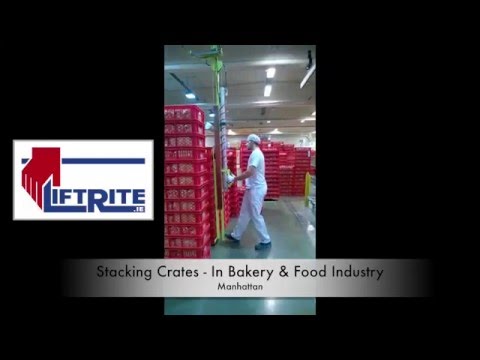
The handling task: lifting and positioning crates as part of a food or bakery stacking operation.
The project-specific solution: the crate-handling arrangement shown supports the load during stacking, allowing the operator to guide its placement. It provides another approach to repeated handling where crates need to be organised at different heights.
For your food production process: crate dimensions, loaded weight, contact points and stack stability determine the handling arrangement. We also check the lowest pickup and highest placement positions, available clearance and cleaning requirements. Any requirement to handle several crates together should be specified separately.
Hygiene, washdown and any hazardous-area suitability are assessed for the specific equipment and process. A demonstration with your actual load helps confirm the proposed grip and handling sequence.
Send LiftRite a photo or short video of the task, the load weight and dimensions, the packaging type and the required pickup and placement heights. Include cleaning requirements and any space restrictions so we can discuss a suitable approach.
Discuss your food and beverage handling requirement or call +353 1 601 6106.


