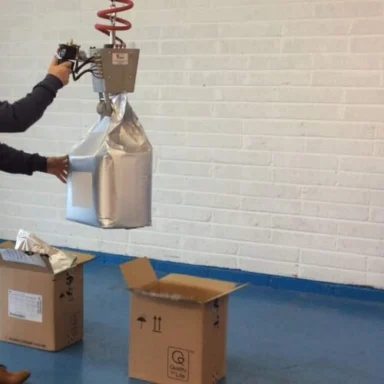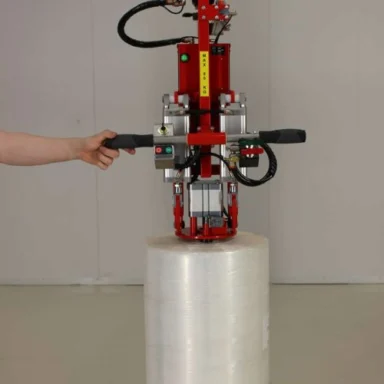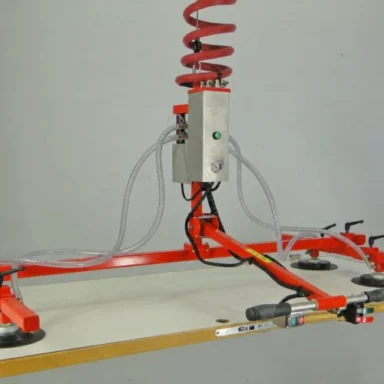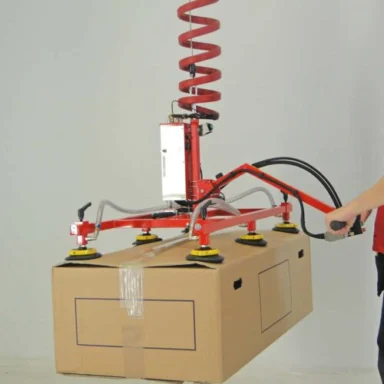
Large sheets and panels can be awkward to handle even when their weight is manageable. Their size, flexibility and surface finish affect how they can be gripped, moved and positioned at a machine or assembly station.
LiftRite supplies vacuum and mechanical handling solutions for steel, aluminium, timber panels and other fabrication materials. The equipment is selected around the sheet, the movement required and the available workspace. These LiftRite installation videos show three approaches to sheet handling.
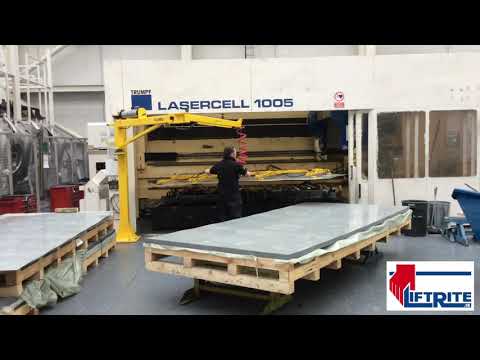
The task: picking up a sheet and positioning it for the next stage of production.
The solution: a vacuum lifter grips the sheet through a suction-pad arrangement suited to its surface and dimensions. The operator can guide the supported load between the pickup and placement points.
What we check: sheet weight, dimensions, thickness, flatness and surface condition, together with the pad positions and access at both ends of the transfer.

The task: changing a sheet's orientation during handling.
The solution: the vacuum lifter shown incorporates 180° tilt, allowing the gripped load to be turned for the next operation. This is an approach to consider where fabrication, inspection or assembly requires access to a different face.
What we check: the centre of gravity, grip throughout the turn, required finishing position and clearance for the full sweep of the sheet, including its corners.

The task: lifting and transferring aluminium sheets within a production area.
The solution: a vacuum gripping arrangement supports the sheet during the movement. Aluminium handling needs particular attention to sheet flexibility, surface finish and the distribution of support across the load.
What we check: thickness, sheet deflection, pad spacing, protective film or coatings, and the placement accuracy needed at the workstation.
The lifting device and its supporting crane need to cover the complete movement: picking from a stack, clearing nearby equipment, turning where required and placing the sheet at the working position. Headroom, machine guards, operator access and the largest sheet's turning envelope all matter.
Explore our vacuum and mechanical lifting solutions, crane systems and glass, steel and timber sheet handling applications. For non-standard shapes or restricted access, we can assess a bespoke handling solution.
Send us the material, minimum and maximum sheet dimensions, thickness, weight and surface finish, plus the pickup and placement heights. A photograph, layout or short video showing the movement and any required tilt will help us assess the grip, lifting arrangement and workspace together.